
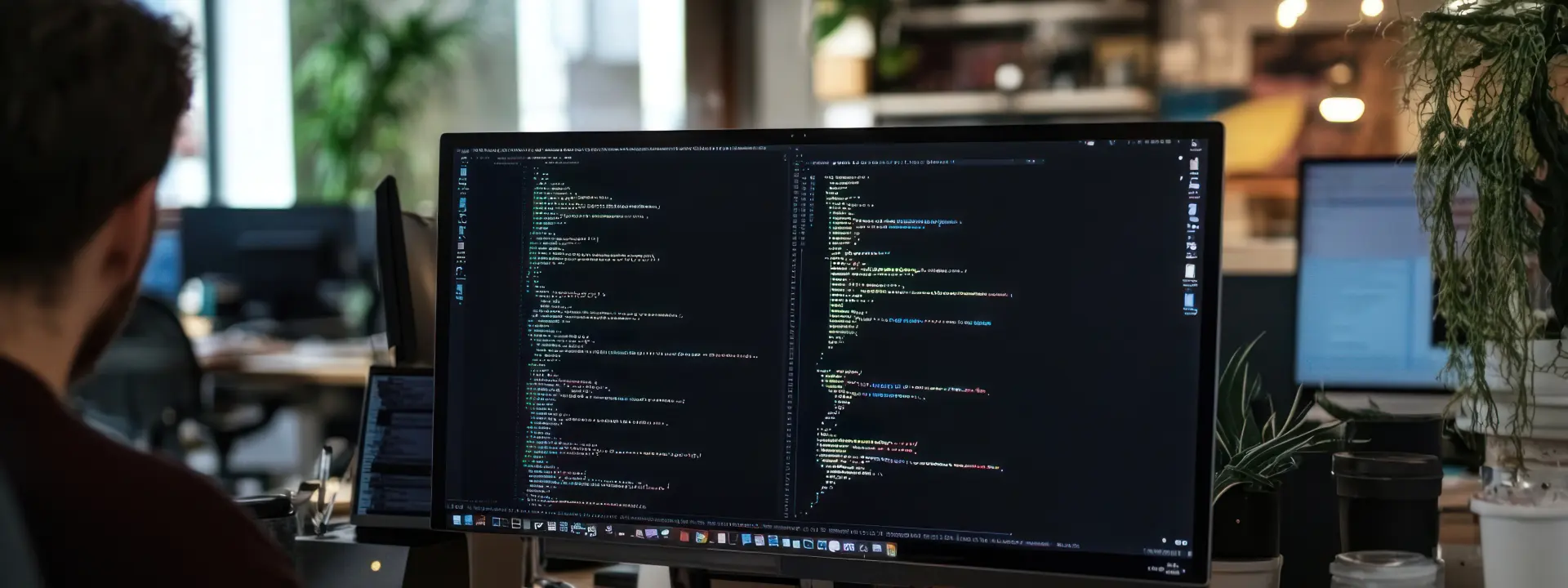
PHP web application development is the right fit when you need a working business tool, not a pretty brochure. If your staff has to enter orders, track leads, approve requests or manage bookings, the app has to be quick, clear and built around the way the work really happens.
We build these systems for owners who want less clicking around and fewer manual jobs. In our experience, most of the frustration comes from software that looks polished in a demo and then gets awkward the moment a real team starts using it.

Built for real work
What PHP web application development should solve first
Start with the job the app must do. A clinic may need appointment handling and patient notes, a distributor may need stock and invoice tracking, and a training centre may need enrolments, batches and attendance. The language is PHP, but the real project is about process, not syntax.
That is where a lot of projects go wrong. Someone asks for a homepage, a few menu items and a login screen, then three weeks later the team says the system still doesn't help with approvals, status changes or reports. The software looks done and still does not reduce work.
Where the pain usually shows up
We see the same issues over and over. Staff keep a part of the job in WhatsApp, another part in Excel, and another part in a notebook on the desk. The result is duplicate entry, missing records and the usual argument about who changed what.
What a useful build feels like
A useful application makes the next step obvious. The right fields appear, the right person gets access, and the record moves forward without someone having to call around for permission. It should feel like the business got tidier overnight, not like a new headache landed on the laptop.
- Give each user only the screens they need, nothing more.
- Keep the first screen short enough to use on a phone in one hand.
- Store records once, then reuse them in reports and notifications.
- Make status changes visible so your team can see what happened without asking twice.
How we plan a PHP application without wasting time
Before any build starts, we map the process in plain language. That is usually the point where hidden requirements come out: a supervisor needs approval rights, a customer should get an email after payment, or a report must show only this month and not last month. Better to hear all of that early than after the screens are half built.
- List the job. We write down the actual work the software must handle, such as leads, bookings, stock, invoices or approvals.
- Define the users. We separate owner, staff, admin and customer roles so the app matches who needs to do what.
- Sketch the screens. We keep the first version simple, because a screen that asks for too much usually gets ignored.
- Set the rules. We decide what can be saved, edited, approved or exported so the system behaves properly from day one.
- Test on a phone. Since many users check business tools on mobile data, we check loading, tap targets and clarity on smaller screens.
What we compare before choosing the structure
Different projects need different shapes. Some are front-office tools for customers, some are internal systems for staff, and some are a mix of both. A clean structure now saves months of patching later, and it's usually the part that decides whether the project stays easy to use.
| Need | What it changes | What to watch |
|---|---|---|
| Login system | User access and privacy | Roles, password resets, session handling |
| Dashboard | Daily visibility | What needs to show first, what can be hidden |
| Forms and records | Data capture | Field order, validation, duplicate checks |
| Reports | Decision making | Date filters, export format, totals, labels |
Why performance matters more than shiny features
On paper, almost every system sounds easy. In the real world, the person using it may be on a 4G connection in Nagercoil or somewhere else in Tamil Nadu where the signal gets patchy inside a shop or office. If the app loads slowly, people skip features, take shortcuts, or go back to paper and WhatsApp.
That is why we care about speed early. We keep the interface plain, reduce unnecessary scripts and avoid bloated pages that make a staff member wait for no reason. A business tool does not need drama. It needs to open, work and get out of the way.
Mobile use changes the build
People often imagine web applications being used only at a desk. That's not how it works now. Owners check a dashboard on the move, field staff update records from outside, and managers confirm details from a bus, a car or a shop counter. If those screens are hard to tap, the app loses its value fast.
Simple screens age better
Fancy interfaces date quickly. Plain screens with sensible labels hold up longer because the business process is what people remember, not the decorative parts. We would rather make one strong action button and one clear table than build a screen full of little surprises.
What a business can build with PHP
PHP is used for a wide range of practical systems. A few of the ones people ask for most are customer portals, booking flows, admin panels, enquiry tracking, quotation tools and internal approval apps. Each one solves a different mess, but the goal is the same: less manual work and fewer mistakes.
Some businesses start with one narrow job and then expand. That is normal. A lead tracker may later need invoice links, or a booking app may later need reminders and cancellations. Build the core first, then extend it in a way that does not break the rest of the system.
Where the code matters and where it does not
The language matters when the app has to handle data safely, route users properly and keep logic tidy. It matters far less when somebody is asking for a feature just because a competitor has it. We say no to a lot of decoration. Most of what gets sold on top of that is decoration.
Examples that make sense for smaller teams
A small clinic may need doctor schedules and patient follow-up notes. A restaurant group may need branch wise menus and staff access. A distributor may need stock visibility and pending payment alerts. These are not big-company ideas only; they are the everyday jobs that eat time when they are handled by hand.
How Webglits can help
We build PHP applications as part of our web app development work, and we also tie them to the rest of a business site when that makes sense. If your project needs search visibility as well, we can connect the application plan with SEO so the public side and the working side don't fight each other.
For projects that need a customer-facing front end, our website design work keeps the interface practical and fast, while the application layer handles the rules behind it. If you already know the shape of the problem, we can talk through it and give you a quote within 24 hours, with no obligation.
Call +91 90430 22255, message us on WhatsApp, or email [email protected]. We are in Nagercoil, Tamil Nadu, Mon–Sat 9am to 6pm.
Common questions
Questions people ask before starting
What is PHP web application development used for?
It is used for business systems that run in a browser and need logins, role access, forms, dashboards and data storage. Think admin portals, booking tools, customer accounts, order tracking and internal workflows that your team can use from a phone or desktop.
Is PHP still a good choice for web applications?
Yes, for a lot of business applications it still makes sense. PHP is stable, widely supported and practical when you need a straightforward build that can be maintained without a lot of drama.
How long does a PHP web application take to build?
That depends on the screens, data rules and integrations. A simple internal tool moves much faster than a system with payments, approvals, reports and multiple user types, so the scope has to be clear before work starts.
Can you build a PHP app that works well on mobile data?
Yes. We build for the phone first because that is how many people actually use these systems in Tamil Nadu, especially owners and staff checking details while away from the office. Keep the pages light and the app feels quicker right away.
Do I own the code and login details after the project?
You should, and with us you do. We keep the work cleanly handed over so you keep ownership of the domain, hosting, content, source and the access that matters.
Can PHP applications connect to other tools?
Usually, yes. A PHP application can connect to payment gateways, SMS services, email tools, CRMs and other systems through APIs when the outside service supports it.
Getting the first version out the door
The best first release is usually smaller than people expect. Get the important workflow working, test it with the people who actually use it, then improve the rough edges once real usage starts. A tidy first release beats a bloated one that nobody wants to touch.
PHP web application development works best when the business stays involved, because the details are where the value lives. If you want a system that supports your process instead of getting in the way, we can help you shape it sensibly and keep the build practical from the first screen to the last.

Replies within 24 hours
Tell us what you need
Share your requirement and we will send a tailored quote within 24 hours. No obligation, no pressure — and you talk to the people who would actually build it.