
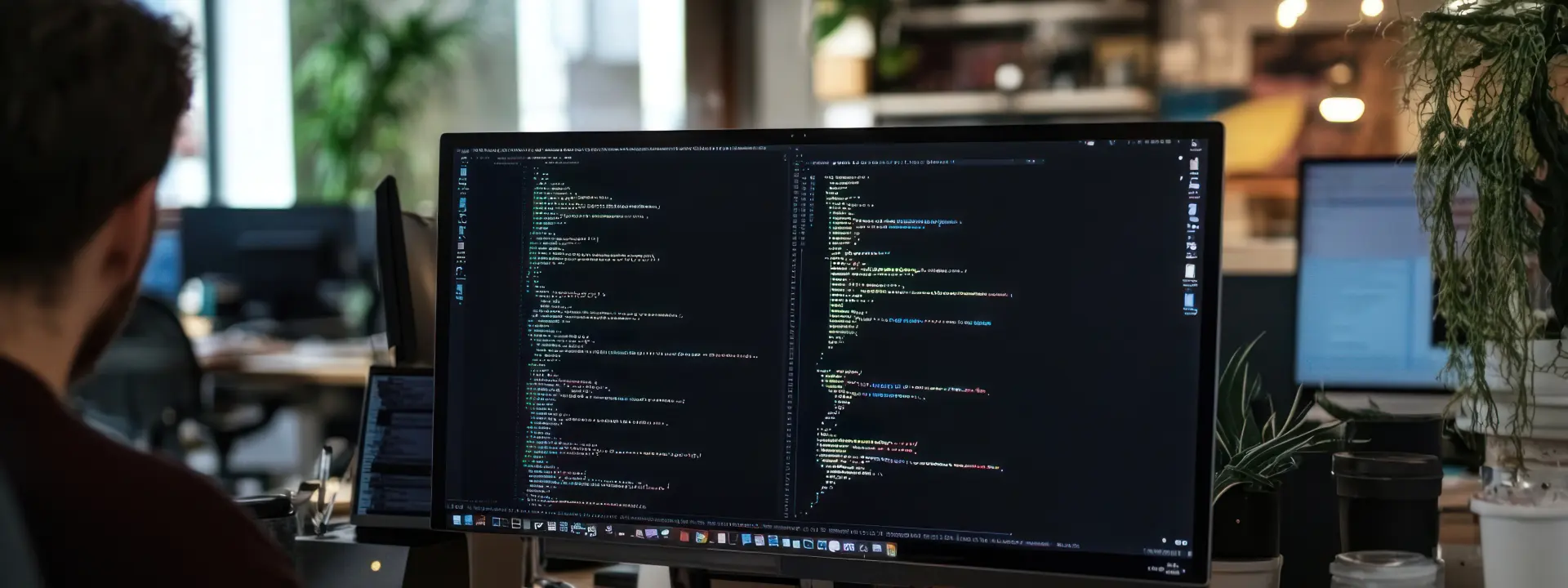
Local web development
Websites that do a job, not just describe one
There is a point where a business stops needing more pages and starts needing the site to actually work. Take a booking. Show a customer their order. Let a parent check a result. Stop three staff members retyping the same enquiry into three different places.
That is development rather than design, and it is a different discipline. We have been doing it from Nagercoil since 2013, for hospitals and colleges, distributors and tour operators, exporters and manufacturers across Kanyakumari District.
We build it properly and we keep the technology boring on purpose, because a system a business depends on should still be maintainable in five years by somebody who is not us.
- Booking, enquiry and appointment systems that fit how you actually work
- Customer and staff logins, with permissions that make sense
- Payment gateway and UPI integration, including GST-compliant invoices
- Dashboards that answer the question you actually ask each morning
- Integration with what you already run - Tally, courier partners, SMS, WhatsApp
- Built on PHP and MySQL, which any developer in India can pick up and maintain

Why it works
How we approach a build
Fitted to your process
We start from how the work is done now, not from a product demo. Software that fights your process gets abandoned within a month.
Boring technology on purpose
PHP and MySQL on ordinary hosting. Not the newest framework - the one your next developer will already know.
Built to be handed over
Documented, readable, in your hosting account. You are never locked in by a system only we can read.
Do you need design, development, or software?
These three words get used interchangeably by everybody selling them, which makes it hard to know what you are buying. Here is how we separate them, and it genuinely changes the quote.
- Web design is how the site looks and reads. Pages, structure, photographs, words. If your need is "people should find us and trust us", this is probably all you want - see website designing in Nagercoil.
- Web development is what the site does. Somebody logs in, books a slot, pays, checks a status, uploads a document. That is this page.
- Software development is the internal system your staff use, which may not be public at all - stock, billing, scheduling, records. That is software development.
Plenty of projects are one of these and get quoted as all three by somebody hoping you will not ask. If you describe the problem rather than naming a product, we will tell you which of the three you actually need, including when the answer is the cheapest one.
The question that settles it
Ask yourself what happens after somebody visits. If the answer is "they ring us", you need design. If the answer is "they should be able to do the thing themselves, and the information should land in our system without anybody retyping it", you need development. That second answer is usually worth money, because it is either winning business at eleven at night or saving a salary's worth of manual work.
What we actually build
A fair description of most of our development work in this district. None of these is a product we resell - each is built around how the particular business runs.
Booking and appointment systems
Clinics, diagnostic labs, salons, service centres and homestays. Slots that reflect real availability, confirmation by SMS or WhatsApp, and a view the front desk can actually work from. The value is not the booking form - it is that the phone stops ringing for things the site could have answered.
Customer and member portals
A login where a customer sees their own orders, statements, service history or documents. Common for distributors, service contracts and institutions. Done properly it removes an enormous amount of "can you send me a copy of" traffic from your staff.
Catalogues that can actually be searched
For businesses with hundreds or thousands of items - spare parts, building materials, textiles, pharmaceutical distribution. A PDF catalogue is not searchable and is out of date the day it is printed. A proper catalogue with filters, stock status and enquiry buttons is a different instrument entirely.
Dashboards and reporting
The screen you look at first thing in the morning. We build it around the questions you actually ask - what came in yesterday, what is overdue, what is running low - rather than around every chart that could be drawn.
Integrations
Making the things you already run talk to each other. Payment gateways, courier tracking, SMS and WhatsApp notifications, Tally exports, Google Sheets, biometric attendance. This is unglamorous work that usually saves more hours than anything else on the list.
| What you want | What it usually involves | Typical timeline |
|---|---|---|
| Enquiry or booking form that reaches your system | Form, validation, notifications, an admin view | 1 to 2 weeks |
| Online appointments with real availability | Slot logic, calendar, confirmations, staff screen | 3 to 5 weeks |
| Customer login and self-service portal | Accounts, permissions, records, document access | 4 to 8 weeks |
| Searchable catalogue with thousands of items | Import, search and filters, stock, enquiry flow | 4 to 8 weeks |
| Payments and GST invoices | Gateway integration, invoice numbering, reconciliation | 2 to 4 weeks |
| Integration with Tally, courier or SMS | Mapping fields, API work, error handling, retries | 1 to 3 weeks |
Why we keep the technology boring
There is a fashion cycle in web development, and following it with a client's money is a mistake we watched other people make often enough to stop. We build on PHP and MySQL, running on ordinary shared or VPS hosting.
That is a deliberate choice, and here is the reasoning rather than the slogan:
- Anybody can maintain it. If we disappeared tomorrow, you could hand your system to any competent developer in India and they would be productive the same week. That is not true of a niche framework chosen because it was interesting.
- It runs on hosting you can actually buy here. No specialist server requirements, no monthly platform fee that grows with your traffic, no surprise when you want to move host.
- It is stable. A system built this way still runs in five years. The churn in fashionable tooling means a project built on last year's favourite can need substantial rework just to keep receiving security updates.
- It is fast enough by a wide margin. For the scale almost every business in this district operates at, the bottleneck is never the language.
Where a project genuinely needs something else we will say so and explain why. What we will not do is choose a technology because it looks impressive on a proposal.
The parts nobody asks about until something goes wrong
When a business is buying a system, the conversation is naturally about features. The things that actually determine whether you regret the purchase are rarely discussed, so we raise them ourselves.
Backups you have tested
An untested backup is a rumour. We set up automated backups and, more importantly, we show you how to restore one. The number of businesses we have met whose backup had been silently failing for months is not small.
Who can see what
Most internal systems start with everybody having full access because it is easier. Then somebody leaves. We build roles and permissions in from the start - it costs almost nothing at the beginning and is awkward to retrofit.
What happens when an integration fails
Payment gateways time out. Courier APIs go down. SMS providers reject messages. A system that assumes everything always works will lose an order silently, which is far worse than showing an error. We build retries and logs so a failure is visible and recoverable.
Security basics
Proper password handling, protection against the standard injection and cross-site attacks, rate limiting on anything public, and HTTPS throughout. None of this is optional and none of it is an add-on we quote separately.
And the documentation
You get a written handover: what the system does, where it lives, how to reach the database, what the scheduled jobs are, and which third-party accounts it depends on. That document is what makes you free to work with somebody else later, which is exactly why it should exist. The ownership position is set out in our terms.
How it runs
How a development project runs
Built in stages you can see, so nothing is a surprise at the end.
Understand the process
We sit with how the work is done now - the registers, the spreadsheets, the WhatsApp groups. The real process is rarely the one on the org chart.
Write it down and quote
A short specification in plain words: what it will do, what it will not, and the price. You approve that before anybody writes code.
Build in visible stages
You get a working link early and it grows each week. Finding out in week two that we misunderstood something costs an afternoon; finding out at handover costs a rebuild.
Test with real data
Your actual records, your actual edge cases, and the staff who will use it daily trying to break it. That is when a system stops being a demo.
Launch, train, support
Live with your data migrated, your staff shown how it works, and a written handover. Then we stay reachable on WhatsApp.
Not sure which of these you need?
Describe the problem rather than the product. "Three people retype the same order", "we lose enquiries that come in after six", "I cannot tell what stock we hold without ringing the godown" - those sentences tell us more than a feature list, and they are what we quote against.
Ringing costs nothing and we are not going to talk you into a system you do not need. Quite often the useful answer is smaller and cheaper than the one people arrive expecting.
Call +91 90430 22255, message us on WhatsApp, or email [email protected]. We are in Nagercoil, Tamil Nadu, Mon–Sat 9am to 6pm, and every quote comes back within 24 hours.
Common questions
What businesses ask before commissioning a build
What is the difference between a website and a web application?
A website presents information; a web application does work. If a visitor reads about your services, that is a website. If they log in, book a slot, pay, and can come back later to see the status of that booking, that is an application. The distinction matters because the second involves accounts, data, permissions and testing, which is a genuinely different amount of work.
How much does custom web development cost?
It scales with how much the system has to do, and there is no honest way to quote it without understanding the process it replaces. A booking form is not a portal and a portal is not an ERP. We work out the scope with you first, then give a written quote within 24 hours with the stages priced separately so you can see where the money goes.
Can you work with the software we already use?
Usually yes. Tally, courier partners, payment gateways, SMS and WhatsApp providers, biometric attendance and Google Sheets are all things we have connected to. Where a system has no proper interface we will tell you honestly whether a workaround is sound or whether it will be fragile, rather than promising and discovering later.
Will I be locked into working with you?
No, and we build specifically so that you are not. The code is readable, the technology is ordinary, it runs in your own hosting account, and you get a written handover document. If you decide to move to another developer, they can pick it up. We would rather keep clients because the work is good than because leaving is painful.
How long does a system take to build?
A simple booking or enquiry system is a few weeks. A portal with logins and records is usually one to two months. A full internal system with several modules runs longer and we break it into stages so you get the most valuable part working first rather than waiting for everything.
What happens to our existing data?
It gets migrated. Most businesses arrive with years of history in Excel, in a register, or in an old system nobody likes. We import it, check it against what you expect to see, and keep the original untouched until you have confirmed the new one is right.
Do you provide support after the system goes live?
Yes, as a separate arrangement rather than something assumed - we would rather you knew what you were paying for. Defects in our own work we fix regardless. New features and changes of scope are quoted as new work, which is the honest distinction.
Can our staff use it on phones?
Yes. Everything we build works on a phone browser, which for field staff, delivery teams and anybody away from a desk is usually more useful than a desktop screen. If the use case genuinely needs an installed app - offline working, camera, push notifications - that is a mobile app rather than a web application, and we will say so.
Development is where the money in a website stops being a cost and starts being a return, because the things it saves - retyping, phone calls, lost enquiries, orders that arrived after hours and were never seen - are measurable. That is also why we are conservative about what we recommend: a system that gets abandoned has cost you twice.
If you have a process that feels heavier than it should, describe it to us. Call +91 90430 22255, message us on WhatsApp, or use the contact page. A written quote comes back within 24 hours.

Replies within 24 hours
Tell us what you need
Share your requirement and we will send a tailored quote within 24 hours. No obligation, no pressure — and you talk to the people who would actually build it.