
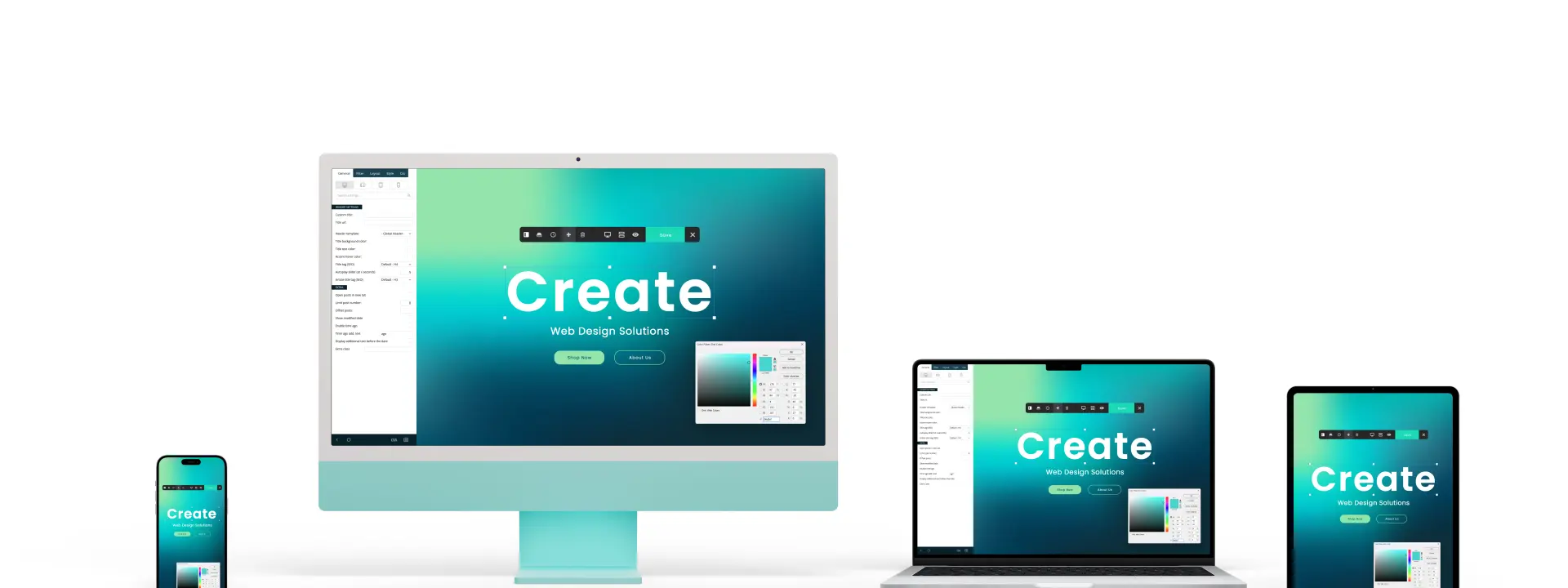
Template design or custom design which to choose is the real question behind most first calls we get. You want a site that looks decent, works on a phone, and does not become a headache three months later. The answer changes once you look at what your business actually needs, not what the brochure says.
For a shop, clinic, restaurant or service business in Kanyakumari District, the site often has to earn its keep fast. People open it on mobile data, compare you with two others, and move on if the page feels slow or awkward. That makes the choice between a template and custom work less about taste and more about fit.
Choose with your head, not the sales pitch
What are you really buying?
A template gives you a prebuilt structure. The layout is already there, the sections are already planned, and the main job is to swap in your content, colours and photos. That can be a good thing when you need to move fast and you do not need much beyond the usual home, about, services and contact pages.
A custom design starts from your business, not from a stock arrangement. The menu, enquiry path, service blocks and mobile behaviour are shaped around what your customers actually do. If your users need to book, ask for a quote, browse products or compare options in a certain order, custom work gives us room to build that properly.
Template sites are not always cheap in the long run
People often assume a template is the safe budget choice and that the job ends there. It does not. A low-effort template can become expensive when you keep paying for changes that the structure was never designed to handle. We have seen pages where the owner wanted one extra section, then another, and the site ended up looking patched together because the original layout had no breathing room.
On the other hand, if the template already matches the job, you should not force custom work just to feel fancy. Most of what gets sold on top of that is decoration. Better to spend the effort where it matters: speed, clarity, content and a layout people can use without thinking too hard.
Custom design is not a trophy
Some people hear custom and picture a luxury build with clever animations and a huge budget. That is not how we look at it. Custom should mean the site fits the business, the content and the workflow. If the site is for a clinic, a restaurant or a service company with different enquiry types, a custom approach can remove clutter and make the next step obvious.
- Choose a template when the pages are standard and the content is simple.
- Choose custom when you need special forms, unique navigation or unusual page structure.
- Choose custom if your brand cannot be squeezed into a stock design without losing identity.
- Choose a template when the launch date matters more than the design process.
- Choose custom if you expect the site to grow into something more specific over time.
How to decide without overthinking it
The cleanest way to choose is to look at use, not opinion. We usually ask the same few questions because they cut through the noise fast. If you answer them honestly, the right direction becomes obvious.
- List the jobs the site must do. Is it mostly information, or does it need to collect enquiries, bookings, menu views or orders?
- Check how unusual your content is. If every page fits the same pattern, a template may work. If pages need different sections, custom starts to make more sense.
- Look at how often you will change it. If you update offers, services or photos every week, the editor and layout need to stay easy.
- Decide where speed matters most. A simpler build usually wins on mobile data, but a bloated template can still lose even before custom work begins.
A simple comparison that helps in real life
The table below is not about theory. It is the practical stuff that changes the day you launch and the month after, when you realise how much control you really have.
| Area | Template design | Custom design |
|---|---|---|
| Launch speed | Usually quicker because the structure exists already | Takes longer because the layout is planned and built for your use |
| Fit for unique content | Works best when your content is standard | Works better when your content needs special sections |
| Change later | Easy for small edits, harder for deep changes | Built to change with the business if planned properly |
| Mobile behaviour | Depends on how the template was made and trimmed | Can be tuned around real mobile use from the start |
| Long-term upkeep | Fine if the site stays simple | Better when the site is expected to grow or branch out |
Where each option usually goes wrong
The biggest mistake with templates is not the template itself. It is choosing one that looks close enough and then forcing it to do a job it was never meant to do. That is where sections get duplicated, spacing gets awkward and the site starts feeling like it was assembled in a hurry, because it was.
Common problems with template sites
Template sites often carry extra code, sliders or blocks you do not need. Some are built to impress on a demo page, not to help a customer on a slow phone in Nagercoil or Tirunelveli. If the file is heavy and the layout is rigid, the owner ends up paying for workarounds instead of getting a clean result.
Where custom design can be overdone
Custom can also be misused. People sometimes ask for custom because they want something different, then end up with too many animations, odd spacing and a layout that is harder to update than it should be. If a design makes the content harder to read, it is not clever. It is just noisy.
We prefer a plain, useful site that loads fast and tells people what they need to know. A clever-looking page that makes your own staff struggle in the editor is no win. And yes, your team will notice that on the second month when they try to update a banner and cannot remember where anything lives.
How Webglits can help
We build both approaches, but we do not push one just because it sounds nicer. If a template is the right fit, we can shape it into a clean, fast site through our website design work. If the business needs something more specific, our custom web applications and web application development services give us room to build around your process instead of forcing the process into a box.
We also think about the next step. A site that starts simple can still be planned so it later grows into SEO work or a fuller service site without being ripped apart. If you want a straight answer on which side makes sense for your case, talk to us and we will tell you plainly.
Call +91 90430 22255, message us on WhatsApp, or email [email protected]. We are in Nagercoil, Tamil Nadu, Mon–Sat 9am to 6pm.
Common questions
Questions people ask before they choose
template design or custom design which to choose for a small business website?
If you need a straightforward site quickly, a template can be the sane choice. If your business has a process, a unique menu, a booking flow or content that really does not fit a box, custom usually pays for itself in less fixing later. The short answer is: choose the option that matches how much the site has to do, not how fancy it sounds.
Is custom design better than a template for SEO?
Not by default. SEO depends more on page structure, content quality, internal links, speed and whether the site is easy to crawl. A clean template can rank fine if it is built properly, and a custom site can still underperform if it is bloated or messy.
When should I avoid a website template?
Avoid a template when you already know you will need special sections, custom forms, multi-step ordering or a design that has to match brand rules closely. Templates also get awkward when your content is unusual and you keep forcing it into the same few blocks. That is where most of the frustration starts.
Does a custom website always cost more?
Usually, yes, because more design work and more development time go into it. But a cheap template that needs repeated workarounds can cost more over time than a site built properly the first time. We see that a lot with businesses that start small and then outgrow the original layout.
Can I start with a template and move to custom later?
Yes, and for some businesses that is the right move. Start with a template if you need to launch, learn what visitors ask for and keep the risk low. Move to custom when you know the site is doing real work and the layout has become the bottleneck.
How do I know which option suits my business?
Look at how different your content is from everyone else in your market, how often you will change the site and whether the site is meant to inform or actively take orders, enquiries or bookings. If the answer involves special flows, custom is usually the safer road. If it is mostly pages and contact details, a template may be enough.
If you're still weighing template design or custom design which to choose, start from the work the site must do on day one and six months later. The right answer is the one that keeps the site useful, editable and fast without creating a pile of fixes. That is the part people forget when they chase looks first.
We can help you choose without the sales talk. If you want the simple version, we'll give it to you, and if your site really needs custom work we will say that too.

Replies within 24 hours
Tell us what you need
Share your requirement and we will send a tailored quote within 24 hours. No obligation, no pressure — and you talk to the people who would actually build it.